Step into any modern kitchen, and you might spot an appliance that effortlessly blends functionality with art – the Alessi Electric Kettle. For decades, the Italian brand Alessi has been synonymous with design excellence, transforming mundane household objects into captivating pieces. An Alessi electric kettle isn’t just a tool for boiling water; it’s a statement, a conversation starter, and a testament to the power of thoughtful design in our daily lives.
A Legacy of Design: The Alessi Story and Its Kettles
Alessi, founded in 1921, has cultivated a rich history of collaborating with world-renowned designers to infuse everyday items with extraordinary flair. Their journey in kettle design is particularly illustrative, marked by groundbreaking pieces that have become cultural icons.
Perhaps the most famous Alessi kettle, the Michael Graves 9093 Whistling Bird Kettle, launched in 1985, exemplifies this ethos. Designed by the American architect Michael Graves, this stovetop kettle became an instant classic, selling over 1.5 million units. Graves infused the stainless steel body with playful, almost postmodern elements, like a conical shape, a wavy plastic handle, and its signature bird-shaped whistle that “sings” when water boils. This blend of European art, American Pop, and even pre-Columbian influences demonstrated Alessi’s commitment to bringing “joy in the everyday.” While not electric, the 9093 set a high bar for design-led kitchenware, paving the way for future innovations, including Alessi’s electric models.
The Alessi Plissé Electric Kettle: A Modern Icon
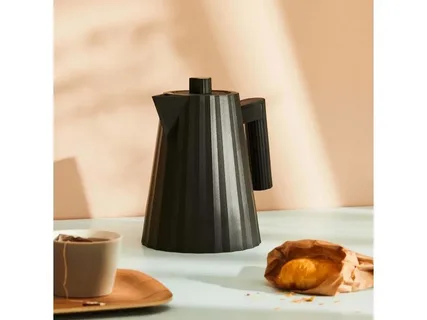
Fast forward to today, and the Alessi Plissé Electric Kettle stands as a contemporary embodiment of the brand’s design philosophy in the electric kettle arena. Designed by Michele De Lucchi, this kettle is a striking example of how a simple appliance can become a sculptural piece.
De Lucchi found inspiration in haute couture, specifically the intricate folds of pleated fabric, to create the Plissé’s distinctive three-dimensional, ribbed pattern. This design transforms a functional object into a display-worthy item, making it a focal point on any kitchen counter. The Alessi Plissé typically offers a capacity of 1.7 to 1.8 quarts (approximately 1.6 to 1.7 liters), features automatic shutoff for safety, and is cordless for ease of pouring. Its body, often made from a durable thermoplastic resin, contributes to its lightweight feel and allows for various color options.
|
Our Picks for the Best Electric Kettle in 2026
As an Amazon Associate I earn from qualifying purchases.
|
||
| Num | Product | Action |
|---|---|---|
| 1 | Kndko Electric Kettle,Temperature Adjustmenet, Stainless Steel Filter and Kettle,1.7L Tea Kettle & Hot Water Boiler For Coffee & Tea, Automatic Shut Off, 1500W, Silver |

|
| 2 | COSORI Electric Kettle, Stainless Steel Tea Kettle, Plastic-free Inner Lid, Filter and Spout, Easy to Clean, Automatic Shut Off & Boil-Dry Protection, Hot Water Boiler & Heater, 1.7L, 1500W |
|
| 3 | Chefman Electric Kettle with Temperature Control, 5 Presets LED Indicator Lights, Removable Tea Infuser, Glass Tea Kettle & Hot Water Boiler, 360° Swivel Base, BPA Free, Stainless Steel, 1.8 Liters |
|
| 4 | Cosori Electric Kettle, No Plastic Filter & Spout, 1.8Qt Tea Kettle & Hot Water Boiler For Coffee & Tea, Water Heater & Teapot, Automatic Shut Off, Borosilicate glass, Black, 1500W |
|
| 5 | Cuisinart PerfecTemp 1.7-Liter Electric Kettle, Cordless Electric Tea Kettle, 1500W for Fast Heat-Up, 6 Preset Temperatures, 30-Minute Keep Warm, Stay Cool Nonslip Handle, CPK-17P1 |
|
| 6 | OVENTE Electric Kettle, 1.7L Fast Boiling Water Heater for Coffee or Tea, BPA Free with Water Level Gauge, Auto Shut-Off, Boil-Dry Protection, Indicator Light and Removable Filter, White KP72W |
|
| 7 | Cuisinart Soho 1-Liter Double Wall Electric Hot Water Kettle, Tea Kettle with Stainless Steel Interior, One Touch Operation to Boil Water for Tea, Hot Cocoa, or Instant Oatmeal, CK-10TR, Truffle |
|
| 8 | Gourmia Electric Programmable Glass Kettle – 1.7L Temperature Control Tea & Coffee Kettle with Digital Touch Display, 6 Presets, Keep Warm, Removable Stainless Steel Infuser, 360° Swivel Base – Peach |
|
| 9 | Chefman Electric Kettle, 1.8L 1500W, Hot Water Boiler, Removable Lid for Easy Cleaning, Auto Shut Off, Boil-Dry Protection, Stainless Steel Filter, BPA Free, Borosilicate Glass Electric Tea Kettle |
|
| 10 | NutriChef Water Boiler and Hot Water Dispenser, 8L Electric Beverage Dispenser with Safety Lock Lid, Non-Drip Tap, Warm Function, Food Grade Stainless Steel, Home & Commercial Use, 19\"x9\"x9\", Silver |
|
Choosing Your Alessi Electric Kettle: Beyond Aesthetics
When considering an Alessi electric kettle, you’re not just buying an appliance; you’re investing in a piece of design history. However, it’s crucial to balance aesthetic appeal with practical considerations and user experiences.
Design: Alessi offers a distinctive look that can elevate your kitchen. The Plissé, for instance, is an undeniable style statement. Before purchasing, consider how its unique form and available colors (black, white, red, grey) will complement your kitchen’s existing decor.
Materials: While Alessi’s stovetop kettles are often stainless steel, many of their electric models, like the Plissé, utilize high-quality plastic. This choice impacts not only the look and feel but also user feedback. While the plastic allows for the unique pleated design, some users have reported concerns over time regarding the material’s durability, with instances of discoloration or disintegration of plastic components after a couple of years. It’s important to research specific model reviews thoroughly.
Capacity and Features: Most Alessi electric kettles offer standard capacities suitable for individual or family use. Look for essential features like a comfortable, heatproof handle, a clear water level indicator, automatic shutoff, and boil-dry protection for safety. A limescale filter is also a practical addition to ensure clean water and maintain the kettle’s longevity.
Understanding Reviews: Alessi kettles often receive high praise for their stunning design and ability to blend art with function. However, for some models like the Plissé, a segment of user reviews highlights potential issues with build quality, with reports of plastic components discoloring, cracking, or even disintegrating after a period of use. While many owners cherish their Alessi kettles for years, it’s wise to consider both the glowing testimonials and the constructive criticism to make an informed decision.
Using and Maintaining Your Alessi Electric Kettle
Proper usage and regular maintenance are key to ensuring your Alessi electric kettle performs efficiently and retains its beauty for as long as possible.
Proper Use:
- Filling: Always fill the kettle between the minimum and maximum fill lines to prevent boil-dry damage or overboiling.
- Placement: Ensure the kettle is placed on a stable, flat surface away from water sources and heat-sensitive materials.
- Safety: The heatproof handle is designed for safe pouring, but always exercise caution as steam can be very hot. The automatic shutoff feature is a major safety benefit, preventing the kettle from continuously boiling once the water reaches temperature.
Cleaning and Care:
- Exterior: For models like the Plissé with a plastic exterior, simply wipe with a damp cloth after it has cooled down and is unplugged. Avoid abrasive cleaners that could damage the finish.
- Interior: Limescale buildup is common, especially in hard water areas. To descale, fill the kettle with equal parts white vinegar and water (or use a commercial descaling solution), bring to a boil, let it sit for 30 minutes to an hour, then rinse thoroughly. Never immerse the entire electric kettle in water. Most Alessi kettles are handwash only.
- Longevity: Consistent cleaning helps maintain heating efficiency and prevents material degradation, especially for plastic components.
Alessi Kettles in the Modern Kitchen: Benefits and Beyond
An Alessi electric kettle offers more than just hot water; it brings a unique blend of benefits to the contemporary household.
Aesthetic Statement: Alessi kettles are designed to be seen. They act as functional art pieces, enhancing kitchen aesthetics and reflecting a homeowner’s appreciation for design. They’re perfect for those who view their kitchen as an extension of their living space and want appliances that contribute to the overall decor.
Convenience: Like all electric kettles, Alessi models offer rapid boiling, often much faster and more energy-efficient than stovetop methods. This convenience is invaluable for quick hot drinks, cooking prep, or simply a moment of warmth. The cordless design allows for easy serving and tabletop use.
Integration into Daily Life: For many, an Alessi kettle becomes a cherished part of their daily ritual, from the morning coffee to an evening tea. Their distinctive presence can transform routine tasks into more enjoyable experiences, proving that good design can genuinely improve quality of life. While some criticisms exist regarding long-term durability and support, the initial allure and user satisfaction for design remains strong.
Comparison to Traditional Methods: Electric kettles, including Alessi’s, offer significant advantages over traditional stovetop boiling. They provide faster heating, often with precise temperature controls (though not always on all Alessi models), automatic shutoff for safety and energy saving, and the sheer convenience of a cordless design. Unlike the classic 9093 which required a stove, an electric kettle only needs an outlet, offering greater flexibility in placement and usage.
Expert Insight: What Our Kettle Expert Says
“Alessi has a remarkable talent for turning the ordinary into the extraordinary, and their electric kettles are no exception,” says Lena Chen, a renowned appliance design expert with over 15 years in the home goods industry. “They challenge our perceptions of kitchen tools, proving that functionality doesn’t have to sacrifice beauty. However, as with any designer piece, consumers should delve into the details – understand the materials, read diverse user experiences, and appreciate that sometimes, the artistic premium comes with different practical considerations than purely utilitarian appliances. It’s about finding that perfect balance where innovative design truly enhances, not hinders, the everyday experience.”
Frequently Asked Questions (FAQ)
Are Alessi electric kettles worth the price?
For many, the premium price of an Alessi electric kettle is justified by its unique, artistic design and the statement it makes in a kitchen. They are considered collectible design pieces. However, some users have reported durability concerns with certain models over time, suggesting that the value can depend on individual priorities regarding aesthetics versus long-term practical performance.
|
Our Picks for the Best Electric Kettle in 2026
As an Amazon Associate I earn from qualifying purchases.
|
||
| Num | Product | Action |
|---|---|---|
| 1 | Cosori Electric Kettle, No Plastic Filter & Spout, 1.8Qt Tea Kettle & Hot Water Boiler For Coffee & Tea, Water Heater & Teapot, Automatic Shut Off, Borosilicate glass, Black, 1500W |
|
| 2 | Cuisinart PerfecTemp 1.7-Liter Electric Kettle, Cordless Electric Tea Kettle, 1500W for Fast Heat-Up, 6 Preset Temperatures, 30-Minute Keep Warm, Stay Cool Nonslip Handle, CPK-17P1 |
|
| 3 | Chefman Electric Kettle, 1.8L 1500W, Hot Water Boiler, Removable Lid for Easy Cleaning, Auto Shut Off, Boil-Dry Protection, Stainless Steel Filter, BPA Free, Borosilicate Glass Electric Tea Kettle |
|
| 4 | Gourmia Electric Programmable Glass Kettle – 1.7L Temperature Control Tea & Coffee Kettle with Digital Touch Display, 6 Presets, Keep Warm, Removable Stainless Steel Infuser, 360° Swivel Base – Peach |
|
| 5 | Kndko Electric Kettle,Temperature Adjustmenet, Stainless Steel Filter and Kettle,1.7L Tea Kettle & Hot Water Boiler For Coffee & Tea, Automatic Shut Off, 1500W, Silver |
|
| 6 | OVENTE Electric Kettle, 1.7L Fast Boiling Water Heater for Coffee or Tea, BPA Free with Water Level Gauge, Auto Shut-Off, Boil-Dry Protection, Indicator Light and Removable Filter, White KP72W |
|
| 7 | Chefman Electric Kettle with Temperature Control, 5 Presets LED Indicator Lights, Removable Tea Infuser, Glass Tea Kettle & Hot Water Boiler, 360° Swivel Base, BPA Free, Stainless Steel, 1.8 Liters |
|
| 8 | COSORI Electric Kettle, Stainless Steel Tea Kettle, Plastic-free Inner Lid, Filter and Spout, Easy to Clean, Automatic Shut Off & Boil-Dry Protection, Hot Water Boiler & Heater, 1.7L, 1500W |
|
| 9 | Cuisinart Soho 1-Liter Double Wall Electric Hot Water Kettle, Tea Kettle with Stainless Steel Interior, One Touch Operation to Boil Water for Tea, Hot Cocoa, or Instant Oatmeal, CK-10TR, Truffle |
|
| 10 | NutriChef Water Boiler and Hot Water Dispenser, 8L Electric Beverage Dispenser with Safety Lock Lid, Non-Drip Tap, Warm Function, Food Grade Stainless Steel, Home & Commercial Use, 19\"x9\"x9\", Silver |
|
What materials are Alessi electric kettles made from?
Alessi electric kettles, such as the Plissé, are often made from high-quality thermoplastic resin (plastic) for the body, allowing for their distinctive sculpted shapes. Other components typically include stainless steel heating elements and plastic for handles and bases. The iconic Alessi 9093 stovetop kettle is made of mirror-polished stainless steel.
How do I clean my Alessi electric kettle?
Always unplug and allow your Alessi electric kettle to cool completely before cleaning. The exterior can be wiped with a damp cloth. For interior descaling, use a mixture of white vinegar and water, boil, let sit, then rinse thoroughly. Never immerse the kettle base in water.
Who designed the Alessi Plissé kettle?
The striking Alessi Plissé Electric Kettle was designed by Italian architect and designer Michele De Lucchi. His inspiration came from the elegant folds found in haute couture fashion.
Is the Alessi 9093 a stovetop or electric kettle?
The iconic Alessi 9093 kettle with the bird-shaped whistle is a stovetop kettle, designed to be heated on a hob. While it’s a quintessential Alessi design, it is not an electric model.
Conclusion
The Alessi electric kettle stands as a shining example of how everyday objects can be transformed into works of art. From the playful whimsy of Michael Graves’s iconic stovetop design to the modern, pleated elegance of Michele De Lucchi’s electric models, Alessi consistently pushes the boundaries of functional aesthetics. While the allure of their unique designs is undeniable, understanding the materials, features, and real-world durability is key to making a smart purchasing decision. Ultimately, an Alessi electric kettle isn’t just about boiling water; it’s about infusing your kitchen with a touch of Italian design mastery and finding joy in the beautifully designed objects that punctuate our daily routines.